

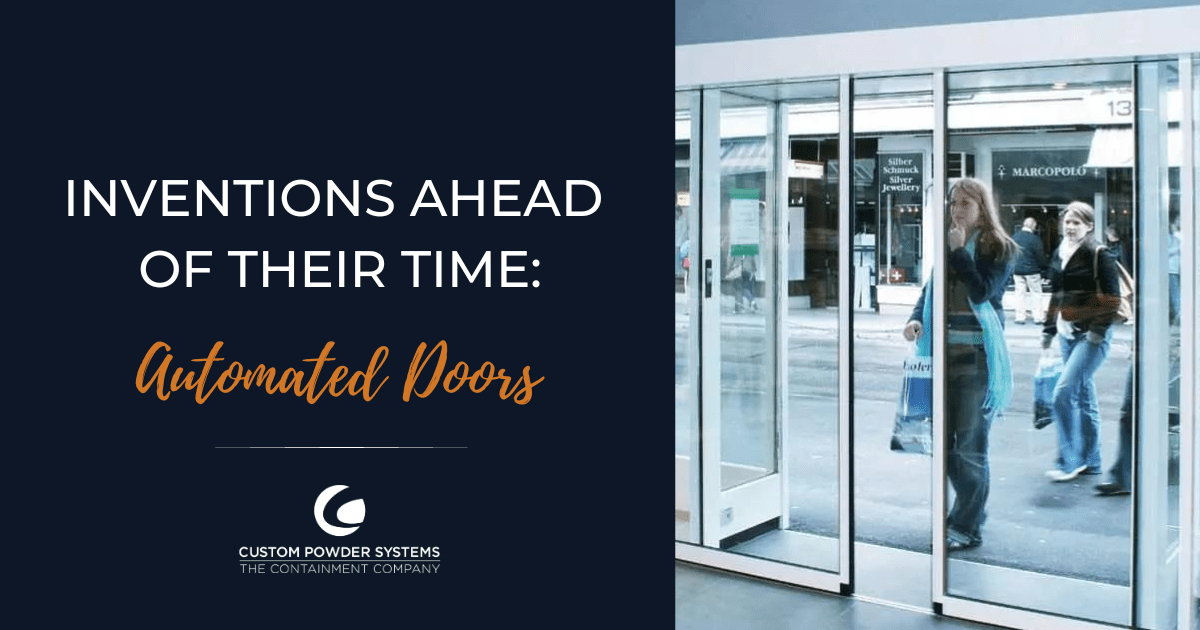
Daily, we encounter automatic doors almost everywhere we go – from supermarkets to office buildings, airports, and even our favorite coffee shops. They have become integral to modern architecture, making our lives more convenient and efficient. But have you ever wondered about the origins of this remarkable invention? (Hint: The idea predates modern electricity!)
The concept of automatic doors may seem like a recent development, but their origins trace back further than you might imagine. The first known automatic door dates back to ancient times when the Greeks and Romans utilized hydraulics to operate doors with the help of pulleys and weights. However, it wasn’t until around the 20th century that true automatic doors began to take shape as we know them today.
Who Invented the First Automatic Doors and How Did They Work?
Heron of Alexandria, a Greek engineer and mathematician, invented the first automatic doors in the first century AD. These early versions, part of his “pneumatica,” operated using air pressure generated by fire, relying on compressed air to open and close. While ingenious, the technology for practical, reliable automatic doors wasn't widely available until 20th-century advancements in electronics, sensors, and control systems.
Although Heron’s automatic doors were ingenious, they were undoubtedly ahead of their time. The technology required to create a practical and reliable automatic door system wasn’t available until much later. It was in the 20th century that significant advancements in electronics, sensors, and control systems paved the way for the widespread adoption of automatic doors.
What Were Key Milestones in the Modern Development of Automatic Doors?
Key milestones in the modern development of automatic doors include the 1931 invention of an optical sensor by Horace H. Raymond and Sheldon S. Roby, followed by Dee Horton and Lew Hewitt's creation of the first commercial sliding automatic door, the 'Horton Automatics,' in 1954. The advent of microprocessors in the 1970s further sophisticated these systems, integrating sensors, timers, and logic circuits for improved intelligence and safety features like presence detectors.
Then, in 1954, the American engineers Dee Horton and Lew Hewitt created the first commercial sliding automatic door, known as the “Horton Automatics.” These doors relied on an electric motor and a complex mechanism of gears and rollers to facilitate smooth opening and closing.
Not long after that, the advent of microprocessors in the 1970s brought a new level of sophistication to automatic door systems. With the ability to integrate sensors, timers, and logic circuits, these doors became more intelligent and responsive. This evolution improved safety features such as presence detectors, which use infrared or motion sensors to detect a person’s approach and trigger the door’s opening.
What Are the Different Types of Automatic Doors and Their Future Innovations?
Automatic doors have evolved beyond sliding motion to include various types like swing doors for high-traffic areas and automated revolving doors, which offer energy efficiency, security, and smooth traffic flow. The future promises further innovations, including integrating artificial intelligence and machine learning for adaptive behavior, and touchless technologies such as gesture recognition and voice control for effortless access.
As technology continues to advance, the future of automatic doors looks promising. Integrating artificial intelligence and machine learning algorithms may enable doors to adapt and learn from human behavior, anticipating movement patterns and adjusting door operation accordingly. Furthermore, the emergence of touchless technologies, such as gesture recognition and voice control, may redefine the user experience, allowing individuals to simply wave their hands or give a voice command to effortlessly gain access to a building, eliminating the need for physical contact.
From Heron’s ancient pneumatic doors to the cutting-edge automated systems we have today, the evolution of automatic doors is a testament to human ingenuity and the relentless pursuit of convenience and efficiency. These remarkable inventions have forever transformed our daily lives, making entryways more accessible, enhancing security, and optimizing traffic flow.
To learn about more inventions ahead of their time, check out these stories about motorcycles, electric cars, and corrective lenses.
To learn more about Custom Powder Systems and the art of engineering, sign up for our newsletter.


